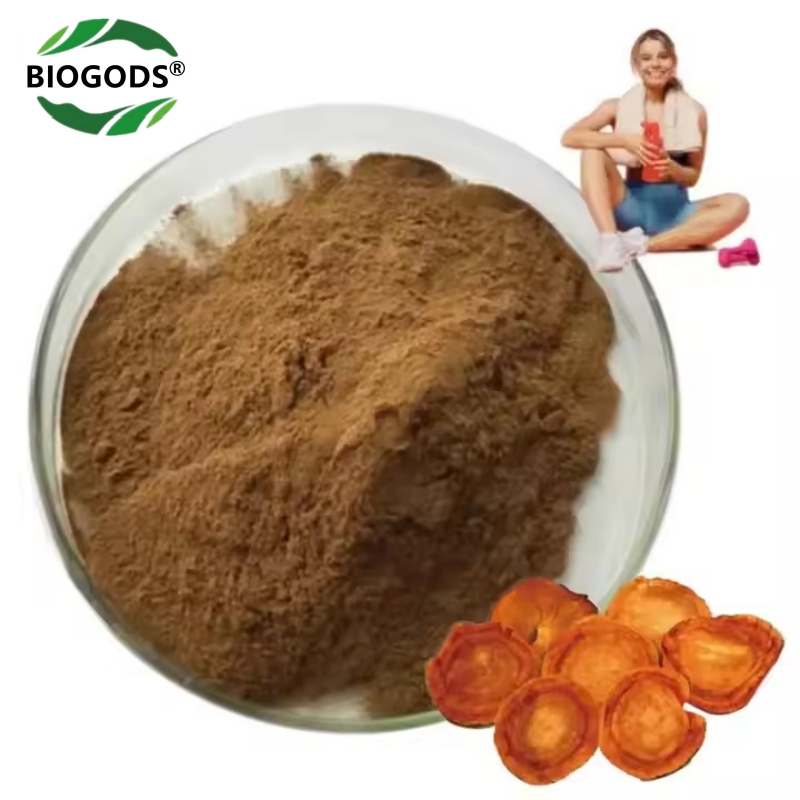
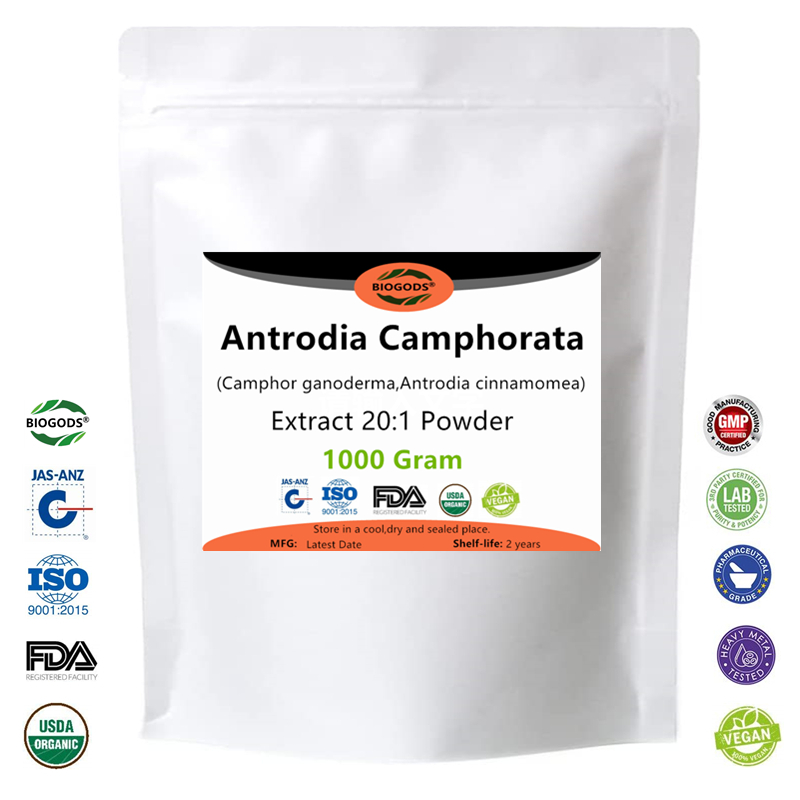
Antrodia camphorata (Niú Zhāng Zhī)Antrodia camphorata, also known as Niuzhangzhi or Taiwanofungus camphoratus, is a rare medicinal fungus endemic to Taiwan. It grows primarily on the inner cavity of the endangered camphor tree (Cinnamomum kanehirae). Renowned for its diverse bioactive compounds, it has been extensively studied for its therapeutic potential and is widely utilized in traditional medicine and modern health products.
Key Functions and Effects1.Anticancer and Antitumor Activity
Its triterpenoids and polysaccharides exhibit inhibitory effects on cancer cell proliferation and may induce apoptosis in tumor cells.
2.Hepatoprotective Effects
Supports liver detoxification, accelerates alcohol metabolism, and promotes hepatocyte regeneration, thereby protecting against chemical-induced liver damage.
3.Antiviral and Immune Modulation
Enhances immune function by stimulating immunoglobulin production and immune cell activity (e.g., macrophages, T-lymphocytes), while suppressing viral replication.
4.Antioxidant Properties
Neutralizes free radicals through polyphenols and terpenoids, reducing oxidative stress and delaying cellular aging.
5.Metabolic Regulation
Helps lower blood glucose and lipid levels by improving insulin sensitivity and modulating cholesterol metabolism.
6.Anti-inflammatory and Antiallergic Effects
Reduces inflammatory responses and inhibits histamine release, alleviating allergic reactions.
7.Antifatigue and Energy Enhancement
Boosts energy metabolism, mitigating physical fatigue caused by prolonged exertion.
Product Name:Antrodia cinnamomea
Latin Name:Antrodia camphorata
|
Items
|
Standards
|
Results
|
Method
|
|
Physical and chemical analysis:
|
|
Description
|
brown yellow powder
|
Qualified
|
Visual
|
|
Taste&Odor
|
Characteristic
|
Qualified
|
Organoleptic
|
|
Extract Solvent
|
Water
|
Qualified
|
/
|
|
Assay
|
20:1
|
Qualified
|
UV
|
|
Identification
|
|
|
|
|
Ash Content
|
≤5.0%
|
3.12%
|
CP2015
|
|
Loss on Drying
|
≤5.0%
|
3.58%
|
CP2015
|
|
Mesh Size
|
100% pass 80 mesh
|
Qualified
|
CP2015
|
|
Bulk Density
|
40~60g/100ml
|
52g/100ml
|
CP2015
|
|
Tap Density
|
60~90g/100ml
|
73g/100ml
|
CP2015
|
|
Residue analysis:
|
|
Heavy Metal
|
≤10ppm
|
Qualified
|
CP2015
|
|
Pb
|
≤2.0ppm
|
Qualified
|
GB/T5009.12-2003
|
|
As
|
≤1.0ppm
|
Qualified
|
GB/T5009.11-2003
|
|
Hg
|
≤0.1ppm
|
Qualified
|
GB/T5009.17-2003
|
|
Cd
|
≤1.0ppm
|
Qualified
|
GB/T5009.15-2003
|
|
Pesticides Residue
|
|
Hexachlorobiphenyl
|
≤0.2ppm
|
Qualified
|
CP2015
|
|
Dichlorodiphenyltrichloroethane (DDT)
|
≤0.2ppm
|
Qualified
|
CP2015
|
|
Microbiological:
|
|
Total bacterial count
|
≤1000cfu/g
|
Qualified
|
GB/T 4789.2
|
|
Yeast & Mould
|
≤50cfu/g
|
Qualified
|
GB/T 4789.15
|
|
E.coil
|
Negative
|
Negative
|
GB/T 4789.3
|
|
Salmonella
|
Negative
|
Negative
|
GB/T 4789.4
|
|
Staphylococcus aureus
|
Negative
|
Negative
|
GB/T 4789.10
|
|
Shigella sonnei
|
Negative
|
Negative
|
GB/T 4789.5
|